 Sarah Boffin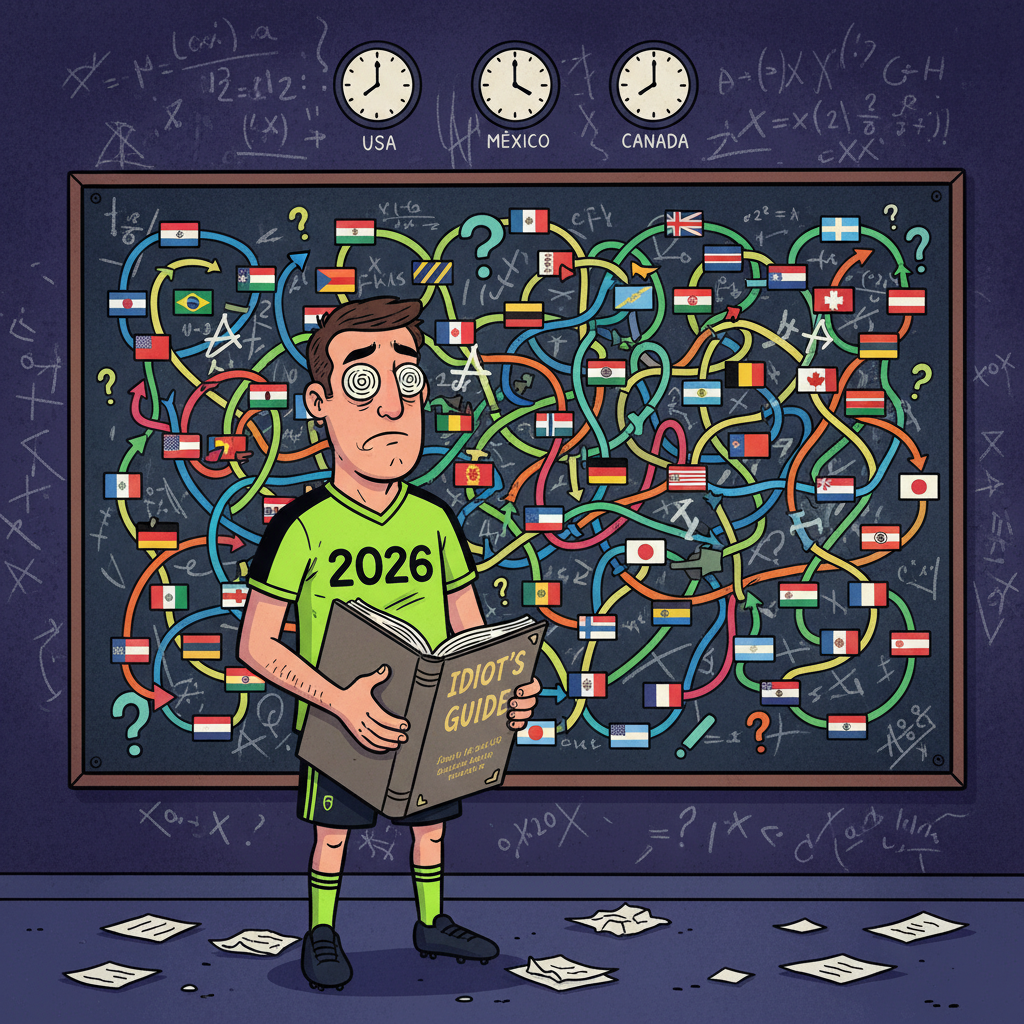
I have been asked to explain the World Cup 2026 format seventeen times this week by people who should know better. Andy asked me yesterday and I had to use a whiteboard. Terry asked me and I had to use puppets. So here is the definitive statistical breakdown of how this tournament actually works, written for people who find the concept of 48 teams overwhelming.
You are not alone. The format is genuinely confusing. Let me walk you through it.
How Many Teams?
48. Up from 32 in 2022. This is a 50% increase in teams, which means a 50% increase in opening ceremony awkwardness, national anthem mispronunciations, and pundits pretending they have watched Uzbekistan play.
How Do the Groups Work?
12 groups of 4 teams each. The top two from each group advance, plus the eight best third-placed teams. That gives us 32 teams in the knockout rounds, which is the same as the old format used to have in total. Essentially, the group stage has become a warm-up act.
The "best third-placed teams" rule is where it gets mathematically spicy. Points first, then goal difference, then goals scored, then disciplinary record, then FIFA ranking. My model suggests that in at least three groups, the difference between qualifying and going home will come down to a single yellow card. One rash tackle in the 87th minute of a group game could end your World Cup. The jeopardy is genuinely beautiful from a statistical perspective.
How Many Matches?
104 matches total. That is up from 64 in 2022. The tournament runs from June 11 to July 19, which is 39 days. That averages out to 2.67 matches per day, which means there will be days where you can watch football from breakfast to midnight. Your employer has been warned.
Where Are the Matches?
Sixteen venues across three countries: eleven in the United States, three in Mexico, two in Canada. The final is at MetLife Stadium in New York/New Jersey. The opening match is at Estadio Azteca in Mexico City, because FIFA knows how to make an entrance.
What About the Time Zones?
This is where European fans need to prepare. Matches will kick off as late as 10pm Eastern time, which is 3am in London. The group stages will have some 1pm local kickoffs, which translates to 6pm in the UK. Manageable. But the knockout rounds will be evening kickoffs in North America, meaning 1-3am for anyone in Europe. The data from 2014 (hosted in Brazil) suggests European TV audiences drop by 40% for matches starting after midnight local time. Your dedication will be tested.
The Key Numbers
48 teams. 12 groups. 104 matches. 39 days. 16 venues. 3 countries. 4 time zones. 1 trophy. And approximately 6 billion viewers worldwide, which makes this the most-watched single sporting event in human history. Again.
My prediction model for chaos level: 8.4 out of 10. The expanded format with 48 teams means more upsets, more mathematical permutations, and more "nobody saw this coming" moments. The probability of at least one traditional powerhouse failing to escape their group is 73%. Which is a statistic I am actually confident about, unlike the 73% I made up about Italy last week.
There. Format explained. You are now qualified to explain it to Andy, who will ignore everything you say and declare that the tournament was better when it had 16 teams and every match was on terrestrial television. He is not entirely wrong.