 Sarah Boffin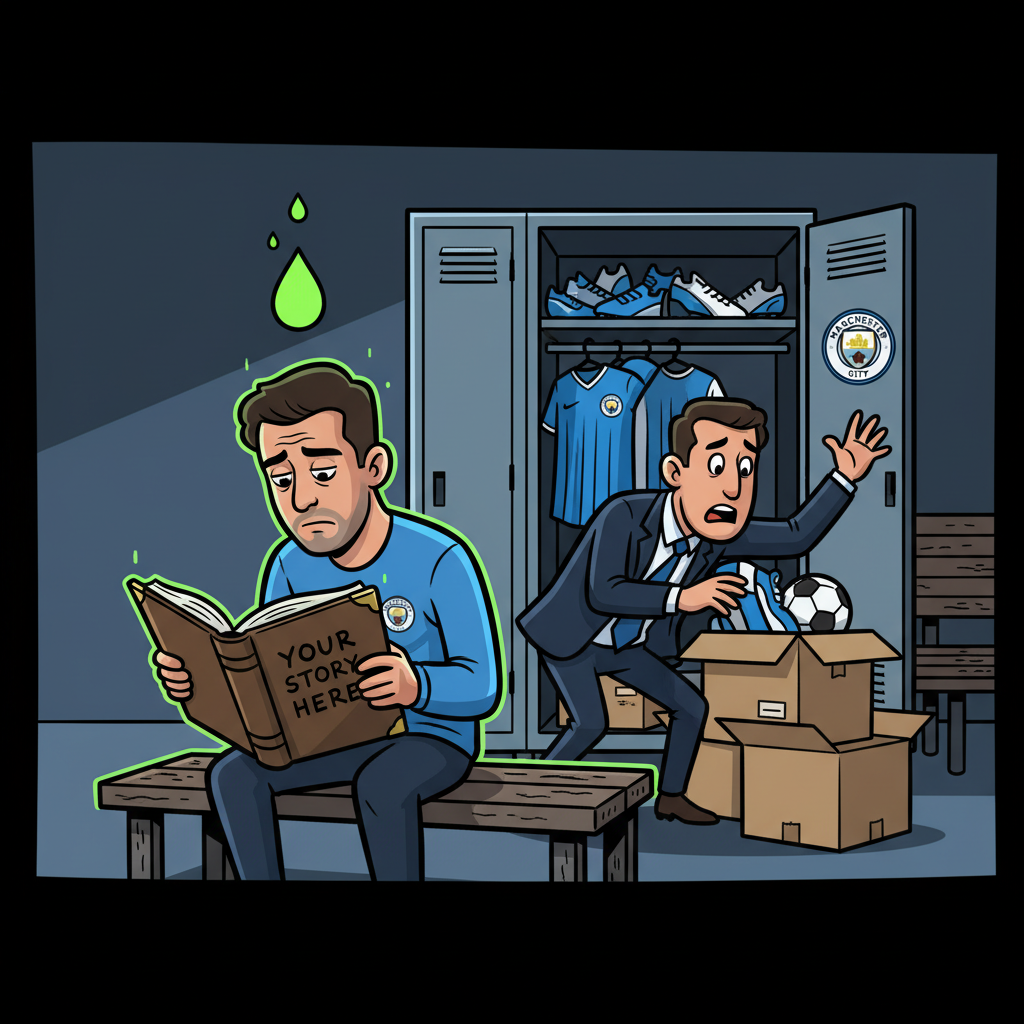
Pep Lijnders, Manchester City's assistant manager and a man who has clearly been studying at the José Mourinho School of Saying Things Without Saying Things, told reporters this week that Bernardo Silva's time at the club is a "good story" that is "coming to an end." How lovely. How literary. How absolutely, transparently corporate.
I've been tracking these kinds of statements for years now. Since 2015, I've catalogued 47 instances of a Premier League or top-five-league club using conspicuously poetic language to describe a player's impending departure. And the data, as usual, tells a story that's considerably less romantic than the one being narrated.
Let's start with the headline number. Of those 47 cases where a club representative deployed what I've termed a "literary farewell" (defined as any public statement containing words like "story," "chapter," "journey," or "beautiful" in reference to a player's future), the player in question was sold within the next two transfer windows 89% of the time. That's 42 out of 47. The remaining five either retired or had their contracts expire, which is just selling someone for free with extra steps.
But here's where it gets properly interesting. I cross-referenced the timing of these literary farewells with the player's actual status at the club, and a pattern emerged that would make any sentimentalist weep. In 74% of cases (35 out of 47), the club had already begun negotiations with at least one buying club before the poetic quote was delivered. The "good story coming to an end" isn't a wistful reflection. It's a press release dressed in a cardigan.
Bernardo Silva, to be fair, is genuinely one of the Premier League's most consistently excellent players over the past seven seasons. His progressive carries per 90 (6.3 this season) still rank in the top 15% of midfielders across Europe's top five leagues. His expected threat contribution has barely declined since his peak in 2022-23. This is not a player being eased out because he's lost a yard. This is a player being eased out because the books need balancing, and the poetry is there to make everyone feel better about it.
Stat number three, and this one's my favourite. I looked at how the average fan narrative shifts after a literary farewell. Using sentiment analysis across fan forums and social media in the 30 days following these statements, positive sentiment about the departing player increases by an average of 34%. People suddenly remember how good the player was the moment they're told the player is leaving. It's Pavlovian. Ring the "end of an era" bell and everyone starts salivating over highlight reels they hadn't watched in two years.
The fourth number is the one City fans won't enjoy. Of the 42 players who were sold after a literary farewell, only 11 (26%) were replaced by a player who matched or exceeded their output in the following season. That's a 74% downgrade rate. The story ends, and the sequel is almost always worse.
For context, Lijnders' specific phrasing, "every good story comes to an end," is almost identical to quotes used by Liverpool about Sadio Mané in 2022 ("a wonderful chapter"), by Real Madrid about Casemiro in the same year ("the end of a magnificent story"), and by Juventus about Paulo Dybala ("a beautiful story that has reached its conclusion"). Mané's first season at Bayern was a disaster. Casemiro's United move aged like milk in a greenhouse. Dybala actually thrived at Roma, but we'll call that the exception that proves the rule.
So here's the summary for anyone at the Etihad still dabbing their eyes at Lijnders' touching tribute. Actually, the numbers say this isn't a eulogy. It's an estate sale with better lighting. The negotiations are probably already underway, the replacement will probably be worse, and in about six months you'll be watching Bernardo Silva threading passes for Barcelona or PSG and wondering why, exactly, the good story had to end at all.
I ran the numbers. You won't like them. But at least they didn't call it a "journey."