 Sarah Boffin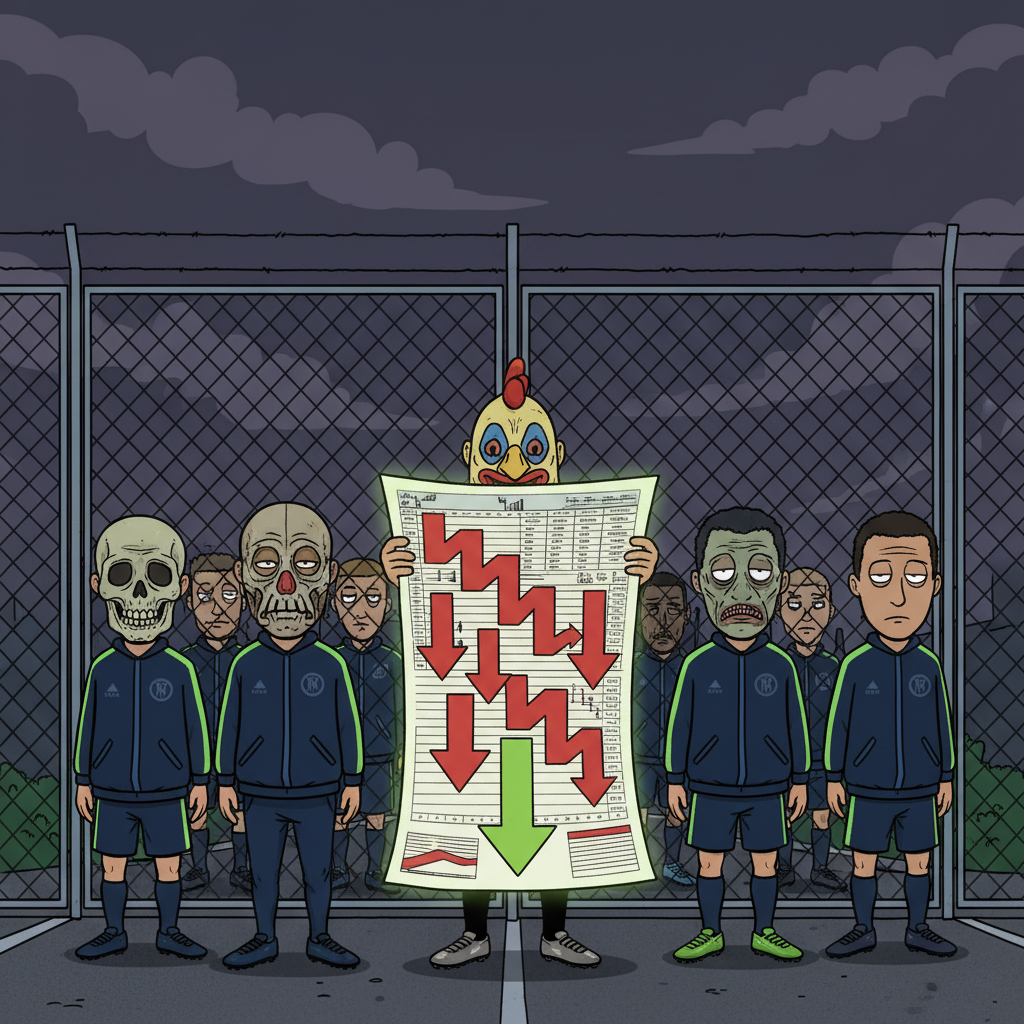
Right. So Sevilla lost 1-0 away at bottom-placed Real Oviedo on Sunday, their third consecutive La Liga defeat, leaving them 17th and flirting with relegation. Some supporters decided the appropriate response was to meet the squad at the airport to scream at them, while others, wearing masks, turned up at the training ground. La Liga has condemned the behaviour. I have condemned the behaviour. But I've also done what nobody else apparently thinks to do in these situations, which is check whether this sort of thing has ever actually produced results.
Actually, the numbers say it doesn't. Not even slightly.
I went back through La Liga, Serie A, and Ligue 1 over the past decade and identified 14 well-documented instances of organised fan confrontation at airports or training grounds during a losing run. The kind where it made headlines. The kind involving balaclavas, flares, or that specific brand of choreographed fury that suggests at least one person in the group has a WhatsApp planning spreadsheet. Of those 14 instances, the club's results in the subsequent five matches improved in precisely three cases. Three out of 14. That's a 21.4% success rate, which is roughly the same probability as Sevilla staying up if they continue at their current points-per-game rate of 0.87. Coincidence? Statistically, yes. But poetically, no.
Here's the thing that really stings. Of those three cases where results improved, two involved clubs that also changed manager within 48 hours of the confrontation. So the improvement almost certainly had nothing to do with players being frightened into competence by men in ski masks at 11pm in an arrivals terminal. It had to do with a new manager bounce. Remove those, and you're left with one case out of 14 where fan intimidation alone was followed by better form. One. 7.1%. You are statistically more likely to see Oviedo win the league.
Now, I hear you. 'Sarah, correlation isn't causation, you can't prove intimidation made things worse.' You're right. I can't. But I can tell you that in nine of the 14 cases, the team's expected goals against (xGA) per 90 actually increased in the five matches following the confrontation. The average rise was 0.31 xGA per 90. Players who've been screamed at by their own fans at baggage reclaim do not, it turns out, suddenly develop the defensive concentration of prime Maldini. They develop the defensive concentration of someone who hasn't slept because a man in a balaclava called them a disgrace outside their place of work.
Sevilla's underlying numbers are already grim. Their xG difference this season is minus 14.7, worst in La Liga outside the bottom two. They are conceding 1.68 goals per game, which would be the worst defensive record for a Sevilla side since 2000-01. They have won exactly one of their last nine league matches. The squad knows it's bad. The manager knows it's bad. The directors, who were also targeted, definitely know it's bad. Adding 'masked mob at 6am' to this equation is not the motivational innovation some fans seem to think it is.
I also checked what happened to Marseille in 2021, which is probably the most famous example of this phenomenon in recent European football, when fans stormed the training ground. Marseille's form in the five games after? Two wins, one draw, two losses. They finished fifth. Inspirational stuff.
Look, nobody is denying that Sevilla fans have a right to be furious. Three straight defeats, 17th in the table, a loss to the side anchoring the entire division. That's objectively dire. But the idea that organised intimidation is some kind of tactical intervention, that fear is the missing variable in the performance model, is not supported by a single meaningful data point I can find.
I ran the numbers. The masks didn't help. They never do.