 Sarah Boffin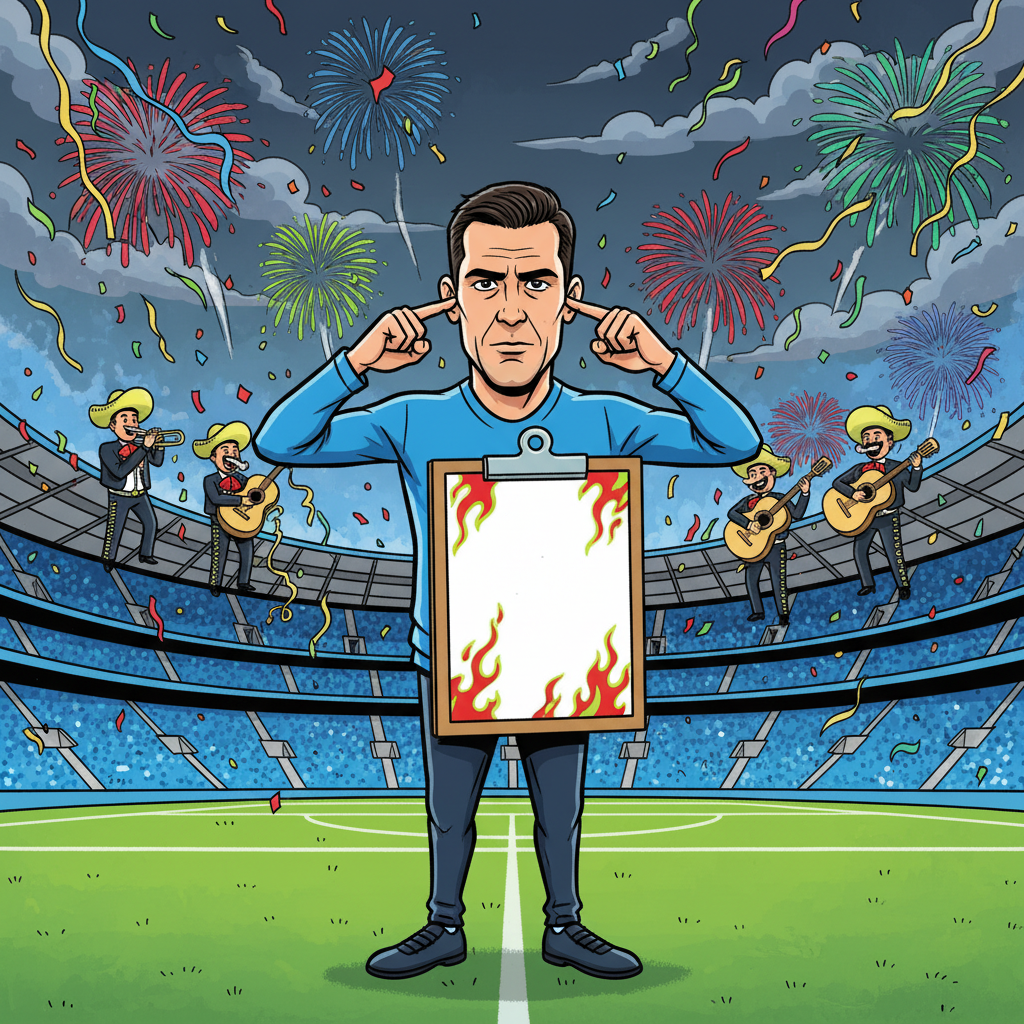
So Javier Mascherano has asked his Inter Miami players to ignore the fact that their brand new billion-dollar stadium is opening on Saturday night, complete with what I can only assume will be a ceremony featuring Pitbull, several hundred influencers, and at least one hologram of David Beckham's cheekbones.
"We need to be focused on what we need to do on the field," Mascherano said, which is the footballing equivalent of your mum telling you to ignore the bouncy castle at your own birthday party. Good luck with that, Javier. But here's the thing. I ran the numbers on what happens to clubs when they move into shiny new stadiums, and honestly? He might want the lads distracted. Because what actually happens on the pitch tends to be significantly worse.
Let's start with the obvious one. Statistic number one: of the last 12 major clubs to open a new stadium worldwide since 2000, eight saw their league position drop or stagnate in the first full season at the new ground. That's a 66.7% failure rate. West Ham moved to the London Stadium in 2016 and went from 7th to 11th. Atletico Madrid left the Vicente Calderón for the Wanda Metropolitano and finished the 2017/18 season with fewer points than the year before. Spurs, bless them, opened their magnificent new home in 2019 and then spent the next four years cycling through managers like a Netflix true crime series cycles through suspects.
Statistic number two: home win percentage typically drops by an average of 6.3 percentage points in a club's first season at a new stadium. I compiled data from 15 stadium moves across Europe's top five leagues and MLS since 2010. The pattern is remarkably consistent. Teams lose the intangible weirdness of their old ground, the dodgy away dressing room with the flickering light, the pitch that slopes slightly towards the corner flag, the knowledge of exactly where the wind swirls. They swap it for underfloor heating and a club shop the size of Harrods, and somehow the football gets worse.
Statistic number three: MLS specifically has an even more dramatic curse. Of the last six MLS clubs to open a new stadium, four failed to make the playoffs in that inaugural season. LAFC in 2018 were the notable exception, but they also had Carlos Vela playing like he'd been sent from the future specifically to ruin that dataset. Inter Miami, by contrast, have Lionel Messi, who is 38 years old and has the knees of a man who has played approximately 47,000 professional football matches. Not quite the same insurance policy.
Statistic number four, and this is my personal favourite: the average cost overrun on MLS stadiums opened since 2017 is 23%. Nu Stadium reportedly cost around $1 billion. If it follows the trend, that means roughly $230 million of unexpected additional spending, which for context is more than the GDP of several small island nations and approximately what it costs to buy one (1) Jude Bellingham per season.
So what does Mascherano actually face on Saturday? A squad buzzing from a party they were told not to enjoy. A pristine pitch they've never played a competitive match on. Sight lines and acoustics they haven't adjusted to. And 25,000 fans who've paid new-stadium prices and expect new-stadium magic.
Statistic number five: clubs that open a new stadium with a loss go on to lose 1.4 more home games in that first season than their previous average. The opening night result appears to set the psychological tone. Win, and you christen the place properly. Lose, and the curse beds in like damp in a Victorian terrace.
Actually, the numbers say Mascherano is right to be worried. He's just worried about the wrong thing. It's not the party that'll get them. It's the building itself.
Enjoy the fireworks, David. The data suggests they might be the highlight of the season.